


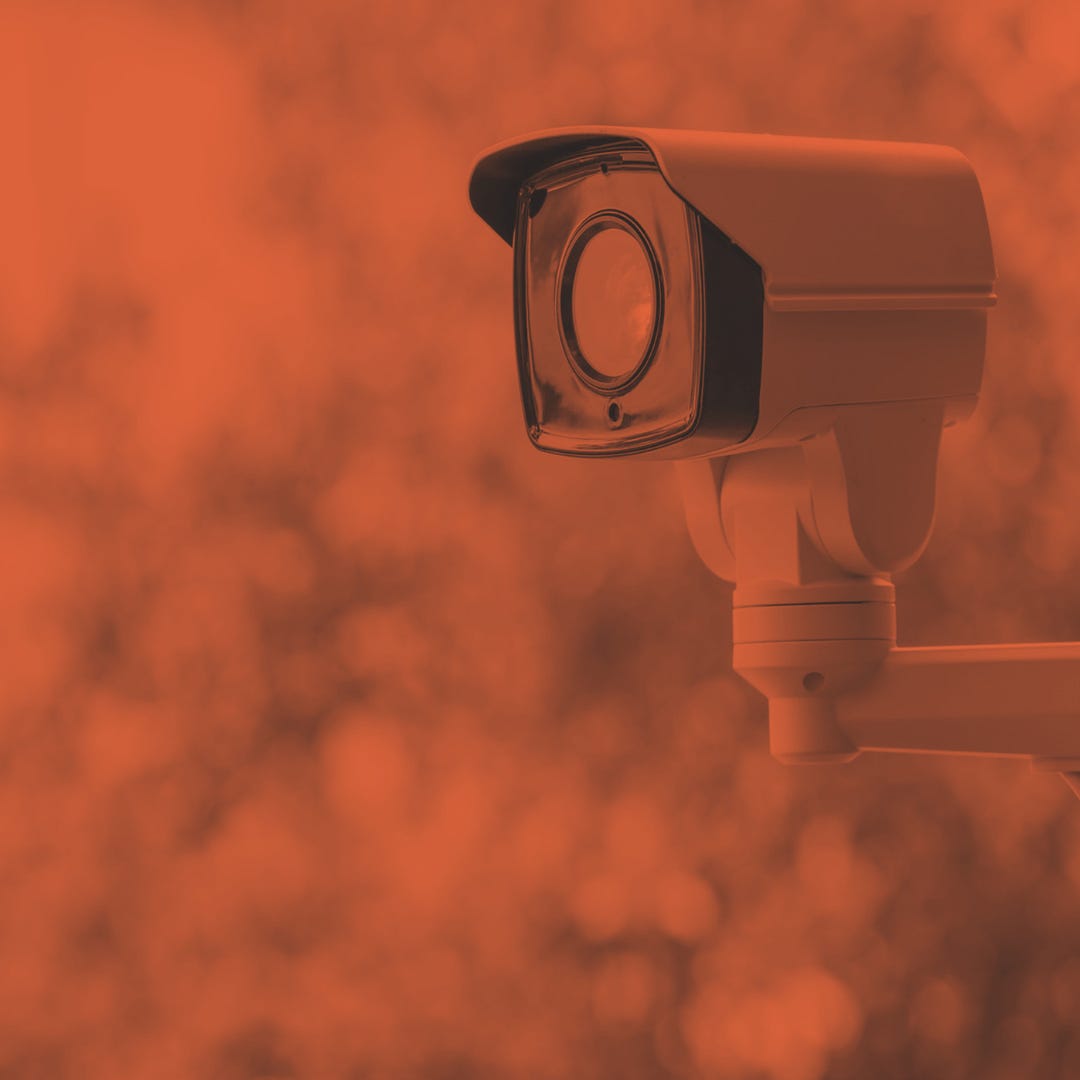
I’ve been looking for a new job lately.1
After years in software engineering, I’ve been looking for opportunities to bring more of my interests together: building things—after figuring out what’s worth building, of course—and helping people navigate change. Every so often, I find a posting that makes me stop scrolling.
Recently, I found an especially good one.
The responsibilities lined up remarkably well with the work I’ve done and, perhaps more importantly, with the kind of work I’d like to do next. Technology deployed at scale. Product strategy. Complex systems. Real-world consequences. Remote work. It was the kind of posting where you get several paragraphs in and begin unconsciously translating each bullet point into a story you could tell during an interview.
There was only one problem.
The job was at Flock Safety—and I couldn’t do it.
For the unfamiliar, Flock describes itself as a public-safety company. Its careers page talks about “safer, stronger communities,” eliminating crime, helping families feel secure, and doing “meaningful work that makes communities safer.”2 I suspect many of the people working there sincerely believe in that mission. Helping find a missing child or identify a vehicle involved in a shooting would give someone good reason to feel proud of their work.
That’s part of what makes this worth talking about: some of the most dangerous systems a society builds are created by smart, earnest people solving narrowly defined problems.
How do we find stolen cars?
How do we identify a vehicle involved in a shooting?
How do we find a missing child?
Those are good questions, but the problem begins when the answer is to build an infrastructure capable of quietly recording the movements of virtually everyone else, twenty-four hours a day, seven days a week.
No matter how useful that infrastructure may be, I couldn’t reconcile helping construct it with my own values.
Because Flock Safety isn’t merely selling cameras, it’s constructing something America should have learned to fear a long time ago: a surveillance network.
You may already have been Flocked
You’ve probably seen a Flock camera, even if you didn’t know it at the time.
The most recognizable versions are small black devices mounted on poles, often paired with rectangular solar panels and positioned along roads, at intersections, or near entrances to neighborhoods.3
They’re touted as automated license plate readers, or ALPRs, but “license plate reader” dramatically undersells what they can do.
Flock’s systems can collect a vehicle’s plate, location, time, make, color, body type, and other visible characteristics.4 The company’s own marketing boasts about searches based on what it calls a “Vehicle Signature,” allowing investigators to use vehicle attributes even when they don’t have a complete plate number.
Drive past one and, absent any suspicion that you’ve committed a crime, your vehicle can become another timestamped data point. Then another. Then another.
The individual photograph is almost beside the point.
The power is in aggregation.
One camera seeing your car at 8:03 a.m. provides a single observation. A network seeing your car at 8:03 a.m., 8:27 a.m., 12:14 p.m., 4:52 p.m., and 7:31 p.m.—across days, communities, and jurisdictions—can reveal patterns in your life.
Where do you sleep? Where do you work? Which church, medical clinic, union hall, or protest do you visit? Whose house?
And how often?
Now, I should say that Flock emphasizes its ALPR product does not use facial recognition and collects vehicle information rather than biometric information. Okay, fair enough, but I invite you to perform a simple thought experiment:
Imagine that I know where your car has been every day for a month. Now tell me with a straight face that I know nothing about you.
Look around
If you want to understand how widespread this infrastructure has become, don’t take my word for it. Go to DeFlock.org.
DeFlock is an open-source project through which volunteers map automated license plate readers throughout the United States. As I write this, its database contains nearly 140,000 documented readers nationwide.5 The database includes Flock and competing systems—an important distinction because Flock is only the most visible participant in a much larger surveillance industry.
August reporting puts Flock’s own deployment at roughly 120,000 cameras, collectively performing around 20 billion plate scans per month.6 It’s difficult to picture what twenty billion of anything looks like, which is where the map becomes useful.
Zoom into your city. Follow your commute, look around your neighborhood, and find the road you take to the grocery store. Then zoom out.
The point of doing this is to connect those enormous numbers to something familiar: the routes we take while going about our lives. A camera outside a neighborhood might seem like a neighborhood matter. Once its observations can be searched alongside those collected elsewhere, the implications extend well beyond that entrance.
“But I’m not doing anything wrong”
Few phrases have done more work on behalf of surveillance than this one.
Why should I care? I’m not doing anything wrong.
I understand why that feels reassuring. Most of us are doing fairly unremarkable things most of the time. We’re getting groceries, going to work, dropping the kids off at soccer practice. Why would that be of any interest to anyone outside us or our families?
But a plate-reader sighting can become part of a searchable record regardless of how ordinary the trip was. Collect enough sightings and someone with access may be able to infer a family’s routines. The absence of wrongdoing doesn’t prevent the information from being collected; it’s precisely what makes collecting it so objectionable.
The question is what the system makes possible—and who gets to decide what to do with that possibility.
We have a tendency to evaluate surveillance through its nicest imaginable use case. It’s true that Flock’s systems have helped recover stolen vehicles, locate missing people, and advance criminal investigations. Those benefits deserve acknowledgment, but so do the consequences when safeguards fail.
Police officers have been accused of using license-plate databases for personal surveillance,7 including tracking romantic partners or acquaintances, leading departments around the country to open investigations into alleged misuse. In Lufkin, Texas, for example, one officer was indicted after investigators alleged tens of thousands of improper searches.8 At that point, reassurance about the system’s intended purpose does very little for the people whose information was searched.
Now, Flock maintains that customers control their data and sharing settings, that searches are logged, and that misuse violates its policies. The company has also responded to the backlash with new safeguards, including a move toward a seven-day default retention period, mandatory case codes, additional auditing, and stronger misuse detection.9 Those are meaningful changes.
But notice what had to happen first:
The network had to exist.
The abuses had to occur.
Citizens had to discover them.
Journalists had to report them.
Activists had to organize.
Municipalities had to revolt.
Only then did stronger safeguards become urgent. That’s backwards.
Before building a system capable of population-scale tracking, the government should have to demonstrate why it needs that capability and what limits will govern it. The people being recorded shouldn’t have to reverse-engineer those answers years later.
This is an American issue
Opposition to mass surveillance is sometimes treated as though it belongs to one political tribe. That shouldn’t be the case.
After all, the Fourth Amendment doesn’t say that people shall be secure against unreasonable searches and seizures only when the people running the government are from the “correct” party.
Eventually, someone you do not trust will hold power. You don’t even have to agree with your neighbor about whether that person is in office already to appreciate the need for limits. Even decent people can do tremendous harm when institutions grant them powers whose consequences they haven’t adequately considered.
This is precisely why the emerging backlash against automated plate readers has become so politically interesting.
Civil-liberties organizations have sounded alarms. Privacy advocates have organized. Local activists have protested, and prominent conservatives have begun expressing the same concern.
You don’t have to agree about immigration, abortion, firearms, policing, Donald Trump, Alexandria Ocasio-Cortez, taxes, Gaza, gender, unions, or much of anything else to recognize that building a machine capable of reconstructing everyone’s movements is an extraordinarily dangerous way to run a free society.
Today’s surveillance target may be someone you dislike. Tomorrow’s may be you. Civil liberties have to survive both possibilities, or all we’ve secured is a temporary advantage for whoever currently gets to choose the targets.
Wisconsin is not outside the network
Here in Wisconsin, an investigation reported that at least 221 Wisconsin law-enforcement agencies were using Flock cameras in 2025. Since then, communities including Dane County, Fitchburg, Oshkosh, and Sturgeon Bay have moved away from the company’s systems amid privacy and misuse concerns, and the UW–Madison Police allowed its Flock contract to expire this summer.10
Those decisions, along with Milwaukee County’s directive limiting Flock camera operations on county property, sound encouraging. There’s an important detail, however, that a headline about canceling a contract can leave out.
Despite kicking Flock to the curb, UWPD simultaneously said it remained supportive of automated license plate readers and would look for another vendor,11 which brings us to the next problem.
Killing Flock isn’t enough
Flock has become the Kleenex12 of the American ALPR backlash: recognizable, everywhere, and synonymous with the function it serves. As a result, public anger has attached itself to the brand, and competitors have noticed.
Axon, Motorola Solutions/Vigilant, Verkada, and numerous other vendors sell technologies capable of performing similar forms of vehicle surveillance,13 and as communities turn against Flock, those companies have an extraordinary business opportunity: become the acceptable surveillance company.
The ACLU has warned about exactly this dynamic: replacing one vendor while leaving the underlying surveillance architecture intact doesn’t solve the civil-liberties problem. In fact, in some ways it makes the problem harder.
Flock cameras are conspicuous once you learn to recognize them. There’s a pole, a solar panel, and a black box pointed toward traffic.
That visibility has become a liability. People photograph them, map them, and organize around them.
And, increasingly, it turns out, people destroy them.
Some people have decided to fight the cameras themselves
Across the country, surveillance cameras have been spray-painted, obstructed, knocked over, cut from poles, and otherwise disabled.14 In August, The Guardian documented at least 33 apparent acts of anti-surveillance vandalism across 23 states.15
I understand the impulse. I really do. When a camera appears on your street without meaningful public debate, records everyone’s movements, feeds data into systems you barely understand, and exists because a municipal procurement process treated surveillance like another piece of road equipment, anger is a rational response.
But smashing cameras presents two problems.
The first is obvious: damaging equipment can be a crime, and people have been arrested and charged for doing it. The second is more strategically important: Destroying the device doesn’t destroy the policy that put it there.
A camera can be replaced, a pole repaired. A city can change vendors. Meanwhile, if the public debate becomes consumed by vandalism, officials get to spend their time condemning damaged property instead of answering why they authorized the collection of innocent people’s movements in the first place.
I worry, too, about what happens when residents understandably tire of repeating this fight. A controversial installation becomes a replacement contract, then a routine renewal. The information keeps accumulating while public attention moves on.
That’s a path to permanence we should be working to interrupt.
So what do we do?
We make surveillance politically expensive.
Start by knowing where the cameras are. Use DeFlock to locate and document them. Show your neighbors, then ask who owns them, which agency receives the data, how long it’s retained, and who can search it.
The sharing arrangements deserve particular attention, too. Which other agencies have access, including federal agencies? Is a warrant required for a historical search? Does someone have to supply a case number? Will the department publish audit logs?
Oh, and was the community ever consulted before the cameras appeared?
These questions give us somewhere concrete to begin. Submit public-records requests, attend police-and-fire and common-council meetings, and write your alderpersons, county supervisors, and state legislators. Ask them to explain what they approved—or what was purchased without their approval—and what they intend to do about it.
We can demand surveillance-impact reports and public hearings before new technology is purchased. We can push for warrants for historical location searches, short retention periods, and bans on immigration, reproductive-health, political, religious, and other sensitive tracking.
Demand independent auditing and penalties for misuse. Demand that surveillance contracts expire unless elected officials affirmatively renew them in public. Safeguards should create obligations that institutions have to meet, with consequences when they don’t.
And when a city says it has “heard the community” and is dropping Flock, ask the follow-up question:
What are you replacing it with?
Because the goal isn’t to DeFlock America only to re-Axon it; the goal is to decide what powers we’re willing to grant the state.
There’s reason to believe this work can succeed. As of late August 2026, the Institute for Justice was tracking 92 local governments that had canceled ALPR contracts since the beginning of 2025.16 Every cancellation deserves scrutiny of what comes next, but those decisions demonstrate that contracts can be challenged and institutions can be made to reconsider.
Usefulness is not the only value that matters. Citizens have been making that clear, and officials have begun responding.
Safety is not the only thing worth protecting
I keep coming back to that job posting. I’m sure I could have made a compelling case for myself to get the job. I’m sure there are interesting technological problems to solve at Flock, and I’m sure there are employees there who go home proud of what they’ve helped accomplish.
I also keep thinking about how much can disappear from view when we focus on doing our particular part well. The engineer improves the search. The salesperson secures the contract. The department adds another tool. Each can point to a job done successfully while the people whose movements make the whole thing useful remain outside the conversation.
The surveillance state doesn’t need soldiers installing cameras beneath enormous banners reading THE SURVEILLANCE STATE HAS ARRIVED. A thousand reasonable procurement decisions will do.
A stolen-car initiative, a public-safety pilot, a neighborhood camera. Then a database integration, a contract renewal, another capability enabled because the infrastructure already supports it. We can arrive at a system that surrounds us without ever having had a public conversation proportionate to the power we’ve assembled.
That is how freedoms disappear in technologically advanced societies—not necessarily through conquest, but rather convenience, indifference, and defaults. Freedoms disappear through people deciding that because they have nothing to hide, nobody else needs somewhere to hide either.
So look for the cameras. Map them. Talk about them. Ask uncomfortable questions about them, and show up when contracts come before your elected officials.
On this issue, we should all be pointing at the same thing: the state should not know where everyone is simply because technology has made knowing possible.
Freedom sometimes requires accepting that dangerous people will possess freedoms too, and privacy sometimes requires accepting that investigators will have to investigate. Rights that exist only when their exercise is convenient for the government aren’t rights.
The cameras are already here, and the network is already enormous, but its continued expansion is not inevitable.
The officials approving these contracts answer to us.
Act like it.
To my current employer, know that this includes internal positions, too. 😇
As of the time of this writing, big box stores like Home Depot have littered their parking lots with them. To their credit, however, Home Depot—or at least the ones I visit—goes out of their way to let you know they’re there.
My apologies to Kleenex for invoking its ubiquity in this context, but this is the price you pay for being synonymous with facial tissue.
Great post. I'm really tired of the argument -- well, if you're not doing anything wrong, you shouldn't mind the cameras. That assumes a level of integrity from everyone who has access to the data that unfortunately does not exist … because there’s a growing knowledge of misuse of flock camera data and rather horrifying mistakes that we should all be very concerned about.
More people need morals like you when it comes to making decisions for their future.